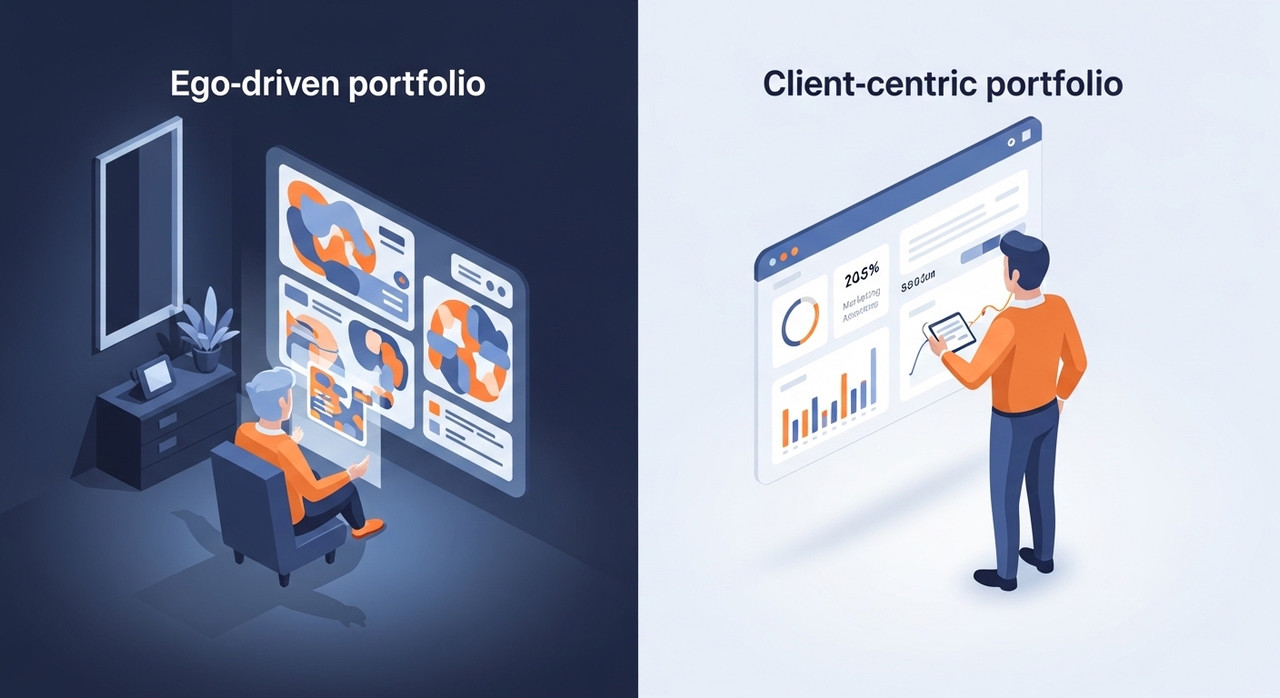
The faster you work, the less you get paid. It sounds like a glitch in the system, but for most freelancers, it is the daily reality. You’ve spent years mastering your craft, investing in the best tools, and refining your workflow. Now, a task that used to take you ten hours takes only two—and your reward is an 80% pay cut.
This is the Hourly Rate Trap. It’s a pricing model that punishes efficiency, discourages expertise, and places a hard ceiling on your income. When you bill by the hour, you aren't selling a solution; you are selling your life in 60-minute increments.
In 2026, the most successful independent professionals are moving away from the "time-for-money" exchange. They understand that clients don't actually want your hours—they want your outcomes.
In this guide, we’ll break down why hourly billing is killing your profit margins and how to transition to a value-based model that scales with your skill, not your clock.
The "Efficiency Paradox": Why Being Good Costs You
To understand why the hourly model is broken, you have to look at the relationship between expertise and time.
The Junior Freelancer: Takes 20 hours to design a landing page because they are still learning the tools. At $50/hour, they earn $1,000.
The Expert (You): Takes 4 hours to design the same page because you have the experience to know exactly what works. At the same $50/hour, you earn $200.
By being "better," you just lost $800.
The Result:
- Burnout: The only way to make more money is to work more hours.
- Misaligned Incentives: The client wants the work done fast; the hourly model incentivizes you to work slow.
- Capped Income: There are only 24 hours in a day. Your income has a physical limit.
Why Your Best Work Deserves Value-Based Pricing
Moving beyond the clock requires a shift in how you perceive your own value. Here are three reasons why "Value Pricing" is the standard for 2026.
1. You Are Selling "Shortcut" Value
When a client hires an expert, they aren't paying for the 2 hours it took to do the job; they are paying for the 10 years it took you to learn how to do it in 2 hours. You are providing them a shortcut to a result. That shortcut has a fixed market value regardless of the time spent.
2. Intellectual Property vs. Manual Labor
Design, coding, and strategy are forms of intellectual property. If you create a logo that a company uses for the next decade to make millions, the value of that logo is astronomical. Billing $150 for "three hours of sketching" ignores the massive financial impact of the asset you created.
3. Predictability for the Client
Clients actually hate hourly billing because they don't know the final cost until the invoice arrives. Project-based pricing gives them a fixed number to put in their budget, which builds trust and makes the "Yes" much easier to get.
Comparison: Hourly Billing vs. Value-Based Pricing
| Feature | Hourly Billing (The Trap) | Value-Based Pricing (The Freedom) |
|---|---|---|
| Income Limit | Capped by your physical time | Unlimited; based on project impact |
| Incentive | Work slower to earn more | Work faster/smarter to earn more |
| Client Relationship | Focused on "What are you doing?" | Focused on "What result are we getting?" |
| Scalability | Zero (You can't create more time) | High (You can improve your ROI per project) |
| Software/AI | AI reduces your pay (it saves time) | AI increases your profit (it cuts costs) |
Step-by-Step: How to Escape the Hourly Trap
Ready to stop watching the clock? Follow this transition plan to move toward fixed-fee and value-based projects.
Step 1: Calculate Your "Floor" Price You still need to know your internal hourly cost to ensure you're profitable. Calculate your expenses + desired profit to find your minimum project rate.
Step 2: Focus on the "Business Case" During the discovery call, stop asking about features and start asking about goals.
- Instead of: "How many pages do you need?"
- Ask: "What is the dollar value of a new lead to your business?"
Step 3: Present Three Options Never give a single price. Offer a "Good, Better, Best" tiered pricing structure. This moves the conversation from "Should I hire you?" to "Which version of your help should I buy?"
Step 4: Productize Your Services Turn your common tasks into "Packages." For example, instead of billing $75/hr for SEO, sell a "Google Ranking Audit" for a flat $1,500. It doesn't matter if it takes you 2 hours or 10.
Step 5: Use Tools to Automate the "Non-Value" Work Utilize platforms like Flowlancerr to manage your client communication and invoicing so you can spend more time on high-value strategy and less time on administrative tasks.
Conclusion
Time is a finite resource, but value is infinite.
Continuing to bill by the hour in 2026 is a race to the bottom. As AI and automation make technical tasks faster, the "hourly" freelancer will see their income vanish. By switching to value-based pricing, you align your success with your client’s success, rewarding your expertise rather than your endurance.
Take control of your freelance business and stop trading time for money. Start scaling your agency properly at flowlancerr.com